
Knit Fabrics on a Sewing Machine
Want to make all of the fabulous Ellie and Mac knit patterns but don’t have a serger? Have no fear, your guide is here!
Hi, I am Devorah Zamansky and I have been regularly sewing clothing for the better part of six years now. My family no longer goes clothes shopping, instead it’s “can you make me …” followed by either a trip to the garment district or a sit-down in front of a computer to choose fabric.
My first garments were wovens because that was what I knew but, as I browsed the independent designers, I saw so many patterns for knits that I had to try them. These days Ellie and Mac patterns are my first stop when looking for new patterns to make.
Why Bother Sewing Knits?
Knit fabrics are cozy, stretch with your body and … do you really need a third reason?
That said, they can be a bit more finicky then, say, quilting cotton. Their stretch can be a challenge even to the most experienced sewist. While I am not the most experienced, my constant need to create has given me ample opportunity to figure a few things out.
As I tend to jump in feet first, my initial attempts at sewing knits had me scratching my head. To be fully honest, I was also using less than ideal fabrics, choosing them for feel instead of practicality. Some of my earliest sews were using slippery bamboo jerseys and athletic fabrics.
So, to make things a bit easier on you, I am here to share the lessons I’ve learned with you!
Machines
I currently own three machines, all bernettes. My main machines are a b79 combo sewing / embroidery machine and a b68 combo serger / cover stitch machine. I also own a bare bones sewing machine, b33, that does only the basic stitches. It is this last machine that I used for my first three years of knit fabric sewing. While it does not have all of the fancy stitches on my newer machine, it did just fine making tees, dresses and even workout clothes for a bit and was retired only because I need a heavier duty machine to make lots and lots of Adult Stephan Cargo Pants.
Basically, as long as you have the ability to sew a zig zag stitch you are good to go.
Other Items
In order to get the best results you will need:
-
A sewing machine – plain or fancy, it doesn't matter
-
Ball point or stretch needles in a fabric appropriate size – I keep sizes 70, 80 and 90 on hand at all times. I mark the outside of needle packets that are not obvious. I really don’t want to have to search for the code guide every time I change a needle.
-
Something to approximate a differential feed – either a special foot for knit fabric (search for knit fabric sewing foot) or a part of your machine that engages for just that purpose or a Walking Foot does a similar job. I used and wore out a knit fabric foot on my basic machine and have a special piece on my fancier one that does the same thing.
-
A double needle (ball point or stretch) if you want to do a two needle hem.
[Ball Point or Stretch Needles]

[Ball Point Needles]

[Differential feed engaged]

[Differential feed not engaged]

[Knit Foot]

[Double Needle/Twin Needle]

Machine Settings
Sewing knits is all about the zig zag. Straight stitches do not stretch so if your garment requires stretch you MUST use a zig zag stitch. Make sure that your foot has an opening that can handle the side to side motion of the needle – the basic foot that came with your machine will work well as will a specialized knit foot.
I am going to list the various stitches for knit fabric that are on my basic machine first and leave the one I could only find on my fancier machine for last.
Zig Zag
First and foremost, the most common stitch for knit fabric is the zig zag stitch.
[Zig Zag Setting]

[Zig Zag on fabric]
The default setting for width and length should work for most items. You might want to make it more narrow if you are using it for a hem. The narrower the zig zag, the less it will stretch.
3 Step Zig Zag Stitch
The 3 Step Zig Zag Stitch puts 3 stitches into each leg of a zig zag. It takes up more width than the standard zig zag but seems to add a bit more strength. I find this one to be most useful for sewing athletic wear, it holds up well wear after wear.
[3 Step Zig Zag Stitch]

[3 Step Zig Zag Stitch on Fabric]

Lightening Bolt Stitch
I have to admit to never using this one despite seeing it as the recommended setting on almost every tutorial I used. Why didn’t I use it? My basic machine doesn’t have it and by the time I got my fancier machine I already had my serger.
When I stretched my sample it stretched really well but frankly the original zig zag works just fine for me. Please feel free to chime in with why the lightning bolt stitch is superior.
[Lightening Bolt Stitch]

[Lightening Bolt Close Up]

Over Edge Stitch (AKA Overcast or Overlock Stitch)
Also used for hemming, this stitch can be used to sew your knit seam edges together for a clean inside or to finish the seam allowances of a woven seam to prevent fraying. It approximates a serged edge with a lot less thread.
[Over Edge Stitch]

[Over Edge on Fabric - the stitch right at the edge]

Double Needle/Twin Needle
A double needle can be used to get a lovely double row of top stitching on your hems. Using the double needle, you thread both needles from separate spools of thread. There is only one bobbin.
Using the straight stitch setting on your machine, lengthen the stitch for top stitching and go. Playing with the needle tension will help prevent tunneling. I have to admit that if I am using my sewing machine to hem a knit I skip the double needle and just do a single row of a really narrow zig zag.
[Double Needle Setting – plain old Straight Stitch]

[Thread set up for Double Needle, 2 Spools (best to have them spool off in opposite directions)]

[Threaded]

[Double Needle Front (loosen the tension a bit to prevent tunneling)]

[Double Needle Back]

The End Result?
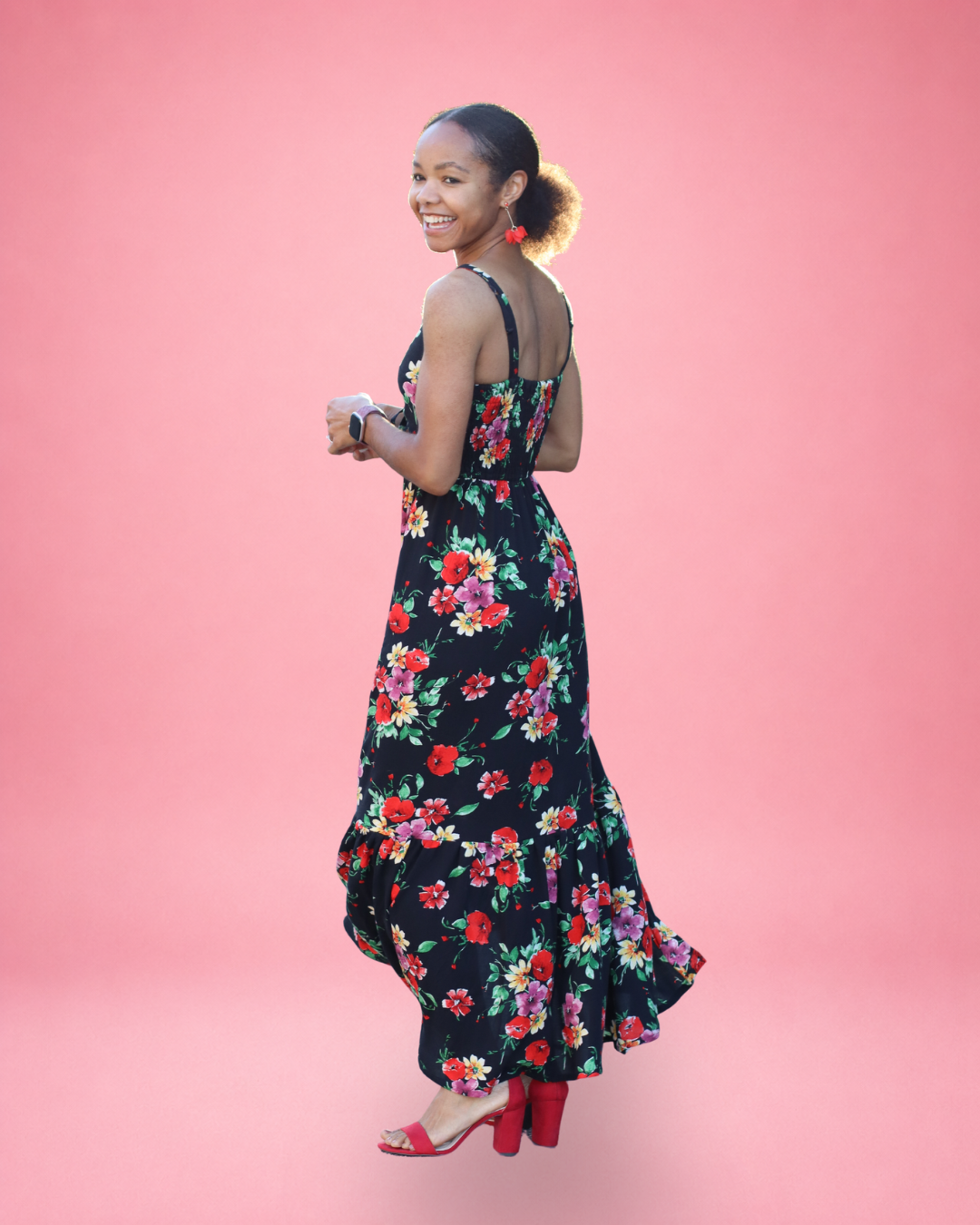
The garment I used for my demonstration is the bottom of the Grow with me Pajamas Pattern, a perennial favorite for baby gifts. I have also made tee shirts and dresses (most notably my first Breezys).
First is the sewn version, second is the serged version. From the outside there is no difference.
[Sewn]

[Serged]

Conclusion
You can construct all the garments you want with a basic sewing machine. Straight stitches for wovens, zig zags for knits. The only special addition you will need for the knits are ballpoint or stretch needles and a knit foot. Now go sew up a storm!
[Breezy Dress Pattern]

Happy Sewing!
- Written by Devorah Zamansky